Jan 05, 2026 · View original article
Nvidia Unveils Vera Rubin Platform at CES 2026, Promises 10x Lower Inference Cost
Nvidia announced its six-chip Vera Rubin platform on 5 January 2026, claiming up to a tenfold cut in inference token cost versus Blackwell, with partner availability in the second half of 2026.
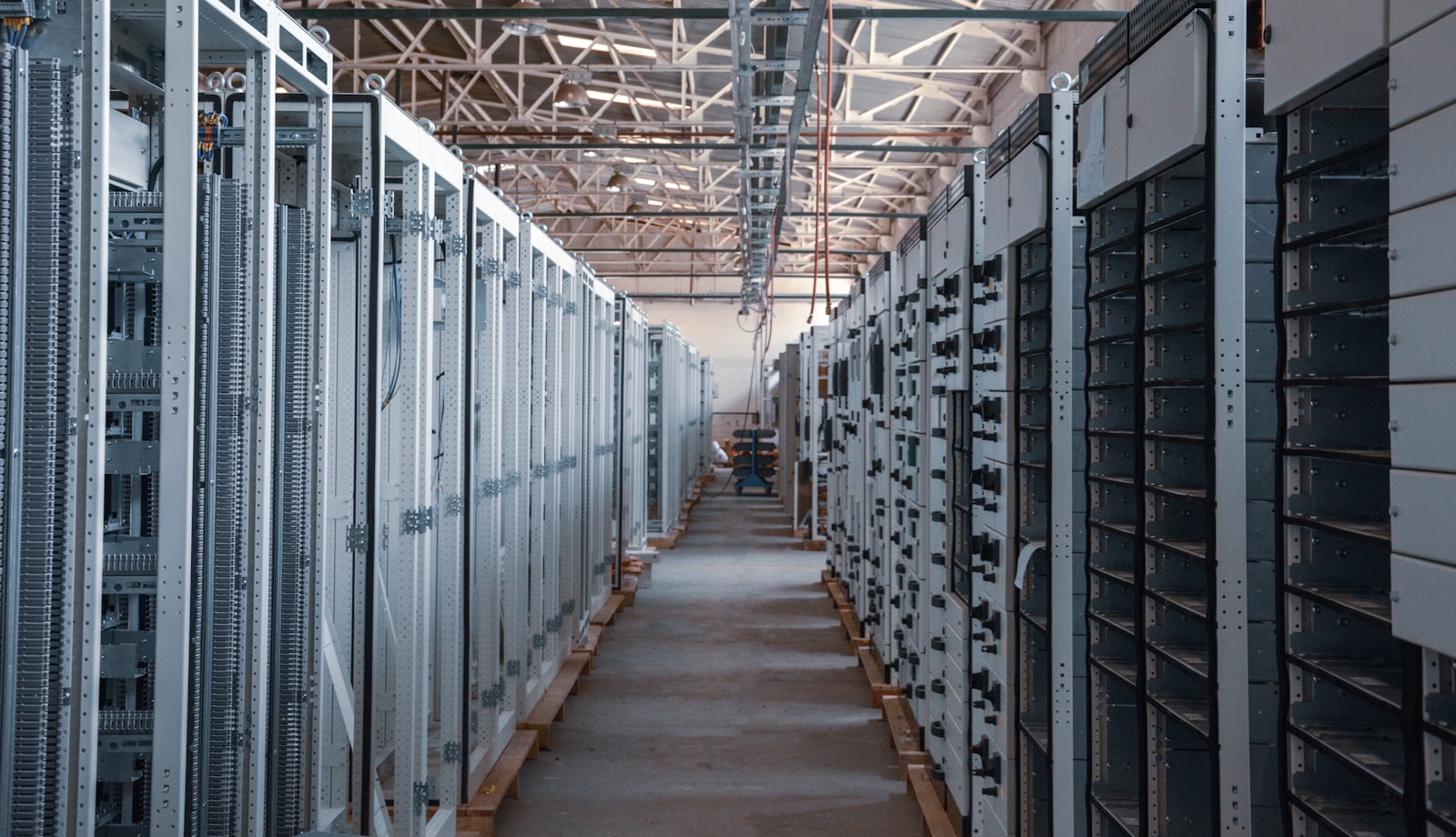
On 5 January 2026, at CES in Las Vegas, Nvidia announced Vera Rubin, the successor to its Blackwell generation and the company's most consequential infrastructure launch since the current AI cycle began. Rather than a single accelerator, Rubin is packaged as a platform of six co-designed chips: the Vera CPU, the Rubin GPU, the NVLink 6 switch, the ConnectX-9 SuperNIC, the BlueField-4 DPU and the Spectrum-6 Ethernet switch. Nvidia's chief executive stated during the keynote that the chips are already in full production.
The headline numbers are aimed squarely at operators of large inference fleets. Nvidia claims the platform delivers up to a tenfold reduction in the cost per inference token compared with Blackwell, requires roughly four times fewer GPUs to train mixture-of-experts models, and provides 50 petaflops of NVFP4 compute per GPU for inference. The flagship rack, the Vera Rubin NVL72, pairs 72 Rubin GPUs with 36 Vera CPUs and offers 260 TB/s of GPU-to-GPU bandwidth; a smaller HGX Rubin NVL8 configuration targets x86 platforms.
Nvidia said the systems will be available from partners in the second half of 2026, and listed AWS, Google Cloud, Microsoft, Oracle, CoreWeave, Meta, OpenAI, Anthropic and xAI among the organisations adopting the platform. Independent verification of the performance claims will have to wait for hardware to reach customers.
The announcement matters because it resets the planning horizon for anyone building or buying AI capacity. Blackwell only began shipping in volume during 2025; a production-ready successor announced barely a year later signals that Nvidia intends to maintain an annual cadence, and that the economics of inference, not just training, are now the primary battleground. A tenfold cost claim, if even partly realised, changes the calculus for hosting agentic workloads that generate far more tokens per task than a chat session. It also intensifies the concentration question: the same handful of hyperscalers and frontier labs are named as launch partners, reinforcing a supply chain in which a single vendor's roadmap dictates what everyone else can deploy and when.
For European buyers, the timing coincides with a policy environment that increasingly treats compute as strategic infrastructure, and with growing scrutiny of energy use. Nvidia's efficiency claims for Spectrum-X networking will be examined closely by data-centre operators facing grid constraints.
What it means for leaders
- Do not lock multi-year capacity contracts on Blackwell pricing without Rubin clauses. Procurement teams should negotiate step-downs or migration rights tied to second-half 2026 availability.
- Treat vendor performance claims as unverified inputs. Under ISO/IEC 42001, resource and supplier decisions should rest on documented evidence; ask cloud providers for benchmark data on your own workloads before committing.
- Model inference cost, not only training cost, in AI business cases. Agentic systems multiply token volume; a shift in per-token economics can make or break a deployment's ROI.
- Revisit concentration risk in the AI supply chain. A single-vendor roadmap driving your entire stack is a third-party risk that belongs in the NIST AI RMF "Map" function and in board-level risk registers.
- Plan for energy and siting constraints. Efficiency gains at the rack level do not eliminate grid capacity issues; align infrastructure roadmaps with sustainability reporting obligations.