Sep 30, 2025 · View original article
Chrome, Visual Search and Helpful Robots: Inside Google’s September 2025 AI Updates
Google’s September 2025 AI recap showcased an AI upgrade for Chrome, a new visual search option in AI Mode, and progress on bringing helpful robots into the physical world.
In October 2025, Google published its recap of the AI features it shipped in September—and the themes are clear: AI is moving deeper into the browser, into search and into the physical world.
One of the most tangible updates is an AI upgrade for Chrome. Instead of treating AI as a separate assistant, Google is increasingly weaving it directly into the browser UI. The September changes include smarter page summaries, contextual help for filling forms and composing emails, and better integration between browsing history and Gemini’s conversational capabilities. For many users, the browser has always been the “operating system of the web”; with these updates, it becomes an AI-native environment where assistance is just part of the fabric.
Search also gets more visual and more interactive. Google’s recap highlights a new visual search option within AI Mode, allowing users to combine text and images in more fluid ways—snapping a photo of a product or a place and then asking follow-up questions in natural language. This builds on existing Lens-style functionality, but with more generative and reasoning capability layered on top. In parallel, industry watchers noted Google testing AI-generated product summaries inside AI Mode, giving shoppers high-level overviews before they dive into individual listings.
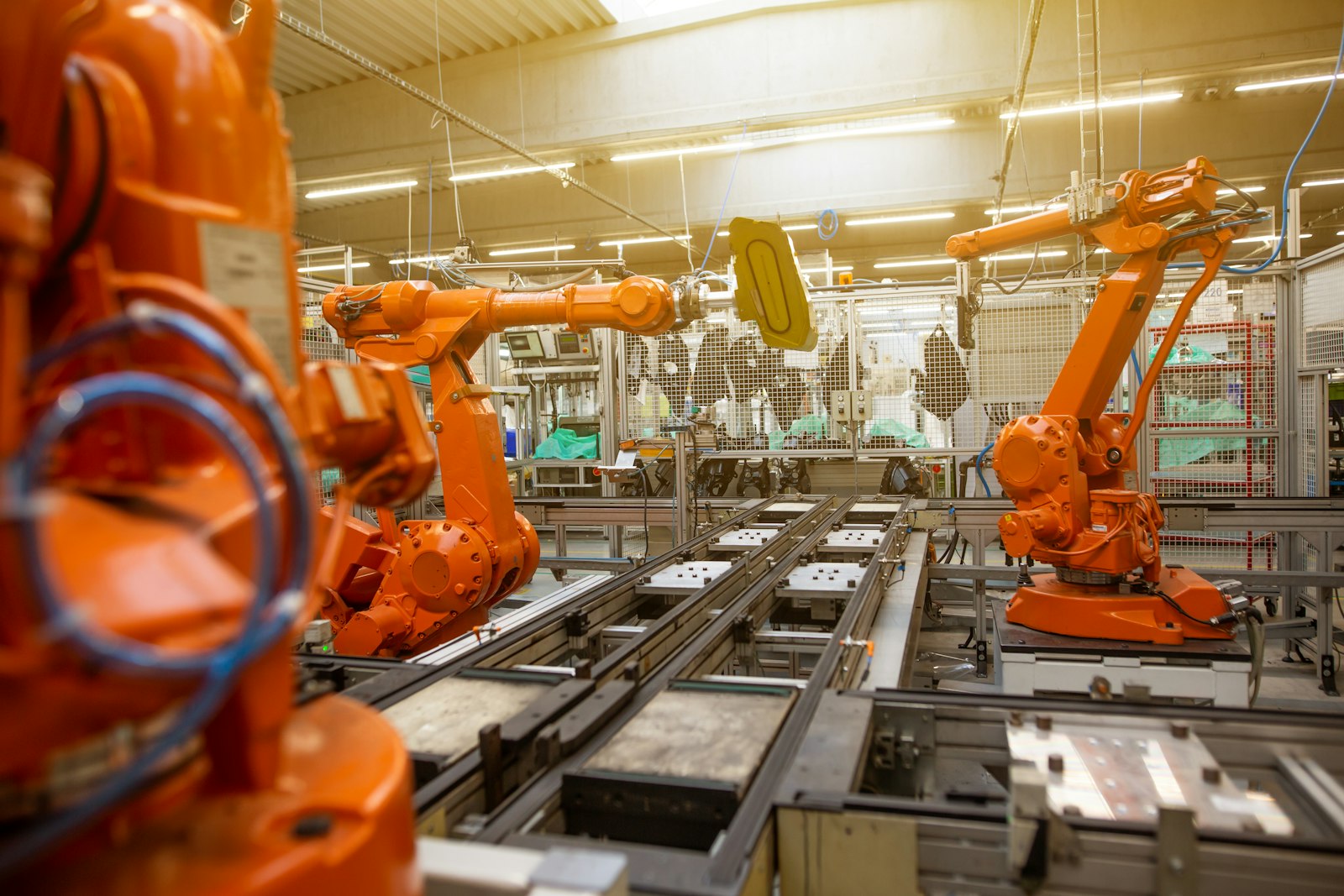
Perhaps the most futuristic part of the September updates is progress on “helpful robots.” Google has been working to connect large models with robotic platforms that can perceive and manipulate the physical world. The recap points to experiments where robots use vision-language models to understand instructions like “clean up the toys in the living room” or “bring me the red mug on the table,” generalising beyond pre-programmed routines. While still early and mostly in research settings, these prototypes show how generative models can become high-level brains for embodied systems.
For enterprises, the implications of these updates are wide-ranging. AI-infused Chrome changes how employees interact with internal web apps, documentation portals and SaaS tools. If the browser can summarise pages, generate responses and offer context-aware shortcuts, it can become a natural place to embed your own RAG (retrieval-augmented generation) systems, connecting Gemini or other models to your private knowledge bases. The challenge is to do this securely, ensuring that sensitive data is handled according to policy even as it flows through AI-enhanced interfaces.
Visual AI search raises similar questions in e-commerce and marketing. If AI Mode increasingly surfaces generated product overviews and comparison summaries, traditional SEO will need to evolve. Brands will need to ensure that product data feeds are accurate, rich and structured in ways that AI systems can digest. They will also need to monitor how their products are represented in AI summaries and consider how to respond when those summaries are incomplete or misleading.
Robotics may feel more distant for most organisations, but the September 2025 demos hint at a future in which warehouse, manufacturing and facility-management workflows are orchestrated by AI systems that see and reason in natural language. For industrial clients, this means preparing data and safety frameworks now: mapping spaces, standardising object labels, defining safe operating envelopes and failure modes. The smarter the brains get, the more important the guardrails around their bodies become.
From Synergy AI Tech Solutions’ perspective, Google’s September 2025 AI updates are a reminder that AI is not just a back-end service; it is a front-end and even physical-world phenomenon. Designing AI strategies that ignore the browser, the UI and the edge devices will miss a big part of the story. The organisations that will benefit most are those that think end-to-end: from model capabilities, to user interfaces, all the way to the physical workflows AI may eventually control.